

Government Estate Data Management
Gather Defence estate and equipment data with structured GDL data gathering folders: per-subcontractor data sheets, master draft and final copies and final submission tracked through the HOTO checklist.
What it does
Every building handed to the Commonwealth has to land in the government's asset register. On the Defence estate that means GEMS (the Garrison and Estate Management System), and the data gets there through GDL (GEMS Data Load) sheets: structured data sheets describing the estate assets being built and the maintainable equipment installed in them, completed by contractors and loaded by the GEMS Master Data Team.
Procom's GDL Data Gathering Folder template gives that process a home. Estate GDL data and Equipment GDL data are kept as separate streams, organised per contributor, each subcontractor and the head contractor getting their own data gathering sheets in both completed and primary (empty) form, with Master GDL copies maintained separately in draft and final states. Who owes which sheet, and what state it is in, stops being a mystery.
Because the GDL folder lives inside the same project as the OMM and the HOTO evidence, estate data tracks alongside the rest of the handover, and the HOTO checklist gates it explicitly, from initial GDL requests through to GDL Final Submission.
How it works
Distribute the sheets
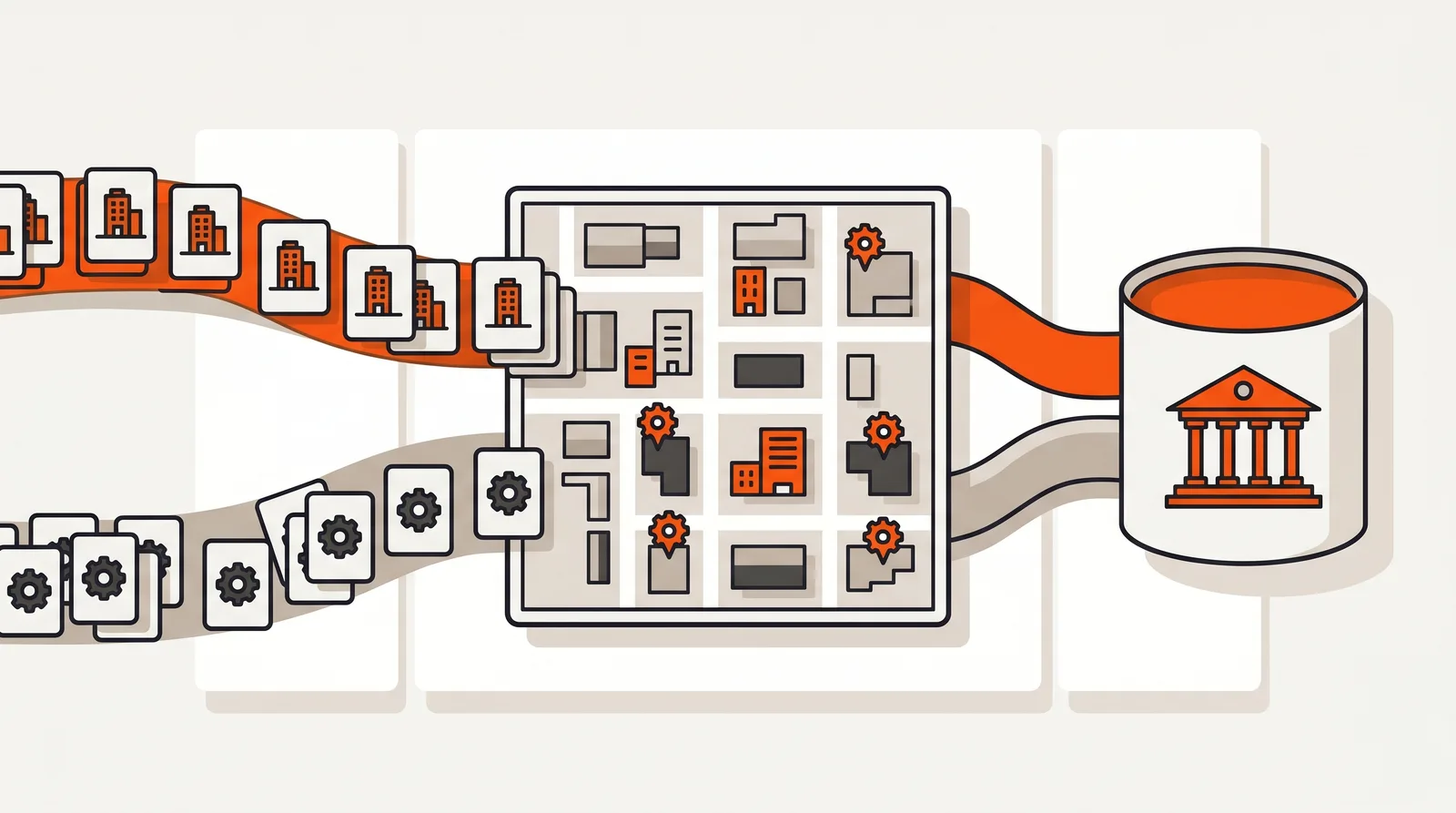
The GDL Data Gathering Folder issues primary (empty) data sheets per contributor (each subcontractor and the head contractor) for both the Estate and Equipment streams. Everyone knows exactly which sheets they own.
Gather & track
Contributors return completed data sheets into their assigned nodes, status-tracked like every other deliverable. Completed and empty versions sit side by side, so coverage gaps are visible at a glance.
Consolidate & submit
Contributor data rolls up into the Master GDL copies (held in draft, then final) for both Estate and Equipment streams. The HOTO checklist tracks the gates through to GDL Final Submission.
Two streams, one estate register
Why it matters
Estate data is the part of a Defence handover that outlives everyone on the project. Long after the team demobilises, GEMS is how the Commonwealth knows what assets exist, where they are and what maintenance they need. Incomplete or inconsistent GDL data means assets that are invisible to the estate's maintenance regime, a problem Defence takes seriously, which is why the HOTO checklist gates it explicitly.
The data itself is gathered from the worst possible position: dozens of subcontractors, each holding a slice of the equipment data, each at a different stage of demobilisation. Without structure, the master GDL becomes a copy-paste exercise across mismatched spreadsheets at the exact moment the project can least afford it.
The HOTO evidence items tell the story of what reviewers check: shell GDL requests around the 90% design milestone, GDL uploads complete, warranty records appearing in both the OMM and the GDL, DLP dates logged in the GDL and the GDL Final Submission itself. Tracking those gates in the same platform as the rest of the handover means estate data cannot quietly fall behind.
Compared to
| Task | Spreadsheets on a shared drive | Procom |
|---|---|---|
| Distributing data sheets | Emailed templates; nobody is sure who has the current version. | Primary (empty) sheets issued per contributor in the structured folder, per stream. |
| Tracking returns | Inbox forensics across months of replies. | Completed sheets land next to their primaries, status-tracked per contributor. |
| Estate vs equipment data | Mixed into one workbook until someone untangles it. | Separate Estate and Equipment streams from the start, mirroring how GEMS consumes them. |
| Master copy control | "FINAL_v2" and "FINAL_FINAL" side by side. | Master GDL copies in explicit Draft and Final states for each stream. |
| Submission readiness | Discovered during HOTO review. | GDL gates tracked in the HOTO checklist alongside the rest of the handover evidence. |
Specifications
Template
GDL Data Gathering Folder: a dedicated manual template structuring Defence estate and equipment data gathering across all contributors.
Data streams
Estate GDL Data (built assets) and Equipment GDL Data (maintainable plant and equipment), kept separate end to end, matching how GEMS consumes them.
Per-contributor sheets
Each subcontractor and the head contractor hold their own GDL Data Gathering Sheets in Completed and Primary (empty) form, individually status-tracked.
Master copies
Master GDL copies for both streams held in explicit Primary (Draft) and Primary (Final) states, one authoritative version at every stage.
HOTO integration
HOTO checklist evidence items cover EDT/GDL completion, GDL uploads, warranty records in OMM & GDL, DLP dates logged in the GDL and GDL Final Submission.
Beyond Defence
The same structured data-gathering approach serves any government estate owner with a central asset register requiring validated asset data at handover.
Frequently Asked Questions
What is a GDL?
GDL stands for GEMS Data Load: the structured data sheets used to load estate and equipment information into Defence's Garrison and Estate Management System (GEMS). Contractors complete GDL data sheets during the project; the GEMS Master Data Team (MDT) loads them into the estate register.
What is the difference between Estate GDL data and Equipment GDL data?
Estate GDL data describes the built assets: buildings, structures and infrastructure being added or changed on the estate. Equipment GDL data describes the maintainable plant and equipment installed within them. Procom's GDL Data Gathering Folder keeps both streams separate and tracked.
How does the GDL Data Gathering Folder work?
The template organises GDL data sheets by contributor: each subcontractor and the head contractor get their own data gathering sheets, in both completed and primary (empty) form, with master GDL copies held separately in draft and final states. Everyone knows exactly which sheet they own and what state it is in.
When in the project does GDL data get requested and submitted?
On Defence projects, shell GDLs are typically requested around the 90% design milestone, updated as construction progresses, and finalised at handover. The HOTO checklist tracks these gates explicitly: from initial GDL requests through to GDL Final Submission and DLP dates being logged in the GDL.
How does GDL data relate to the HOTO process?
GDL completion is part of the HOTO evidence. The HOTO checklists include items covering Estate Data Tool (EDT) or GDL completion, GDL uploads, warranty records appearing in both the OMM and the GDL, and the GDL final submission, so estate data cannot quietly fall behind the rest of the handover.
Does this apply outside Defence?
The discipline transfers. Any government estate owner that maintains a central asset register needs structured, validated asset data at handover. Procom's data gathering structure works wherever the client demands clean estate and equipment data, not just on Defence bases.
GDL submission coming up?
Book a walkthrough on a structured estate data folder, or talk to us about the GDL obligations on your Defence project.