
The short answer
| Patent defect | Latent defect | |
|---|---|---|
| Can it be found by reasonable inspection? | Yes | No |
| When it usually shows up | At or soon after practical completion | Months or years later |
| Typical examples | Scratched finishes, misaligned doors, missing fittings | Failed waterproofing, concealed structural faults, non-compliant cladding fixings |
| Usually dealt with | On the PC defects list or during the DLP | During the DLP if found then, otherwise as a claim afterwards |
What is a patent defect?
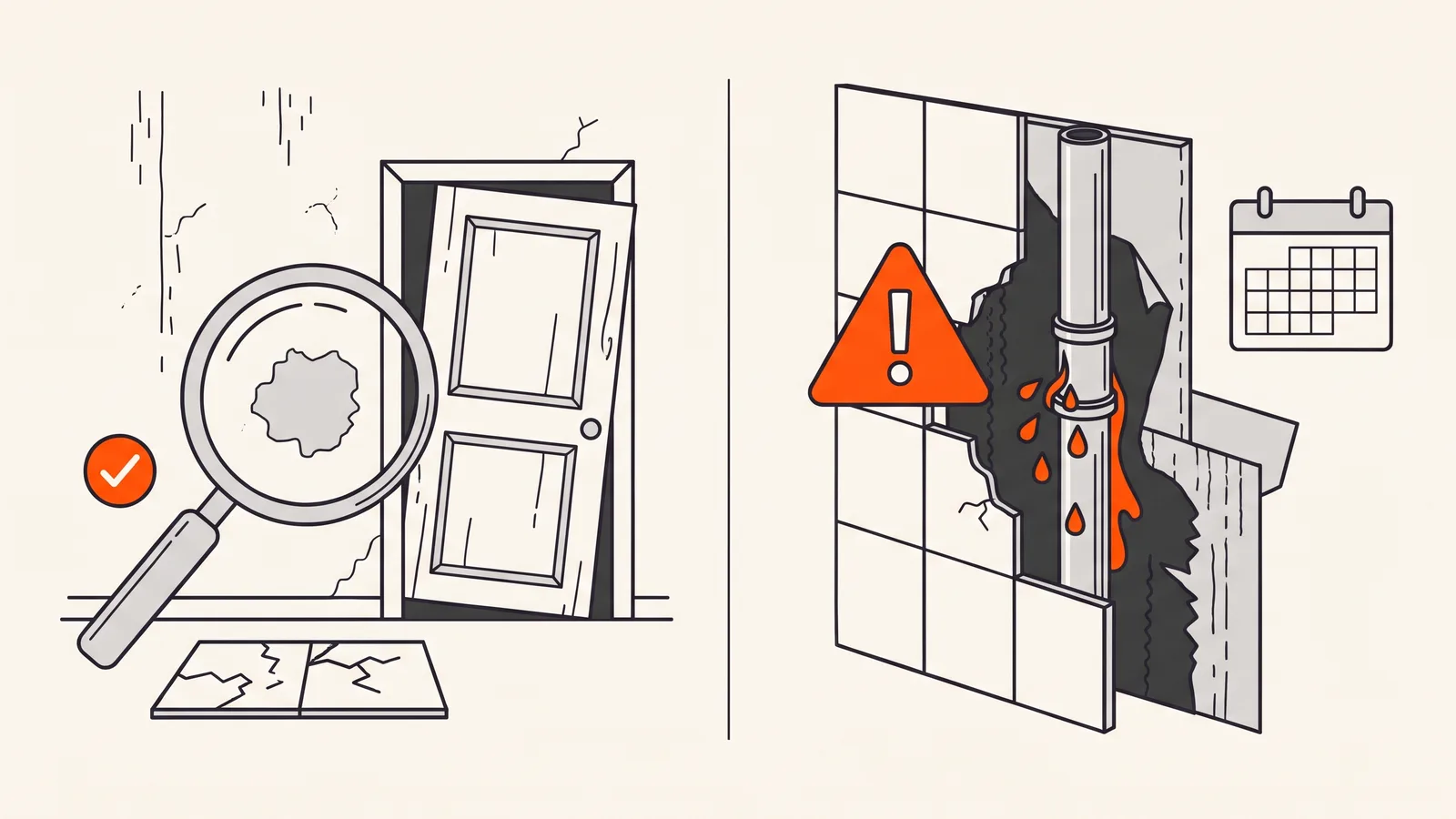
A patent defect is a fault that is visible, or that a competent person would find with a reasonable inspection. Chipped paint, a door that binds, a missing cover plate, a tap that drips, a cracked tile. These are the items that fill the defects list at the practical completion inspection.
Because they can be seen, patent defects are usually dealt with quickly: either fixed before practical completion is certified or listed on the schedule attached to the certificate and closed out early in the DLP.
What is a latent defect?
A latent defect is a fault that exists at completion but cannot be found by reasonable inspection, because it is hidden or only appears under real use. Common examples:
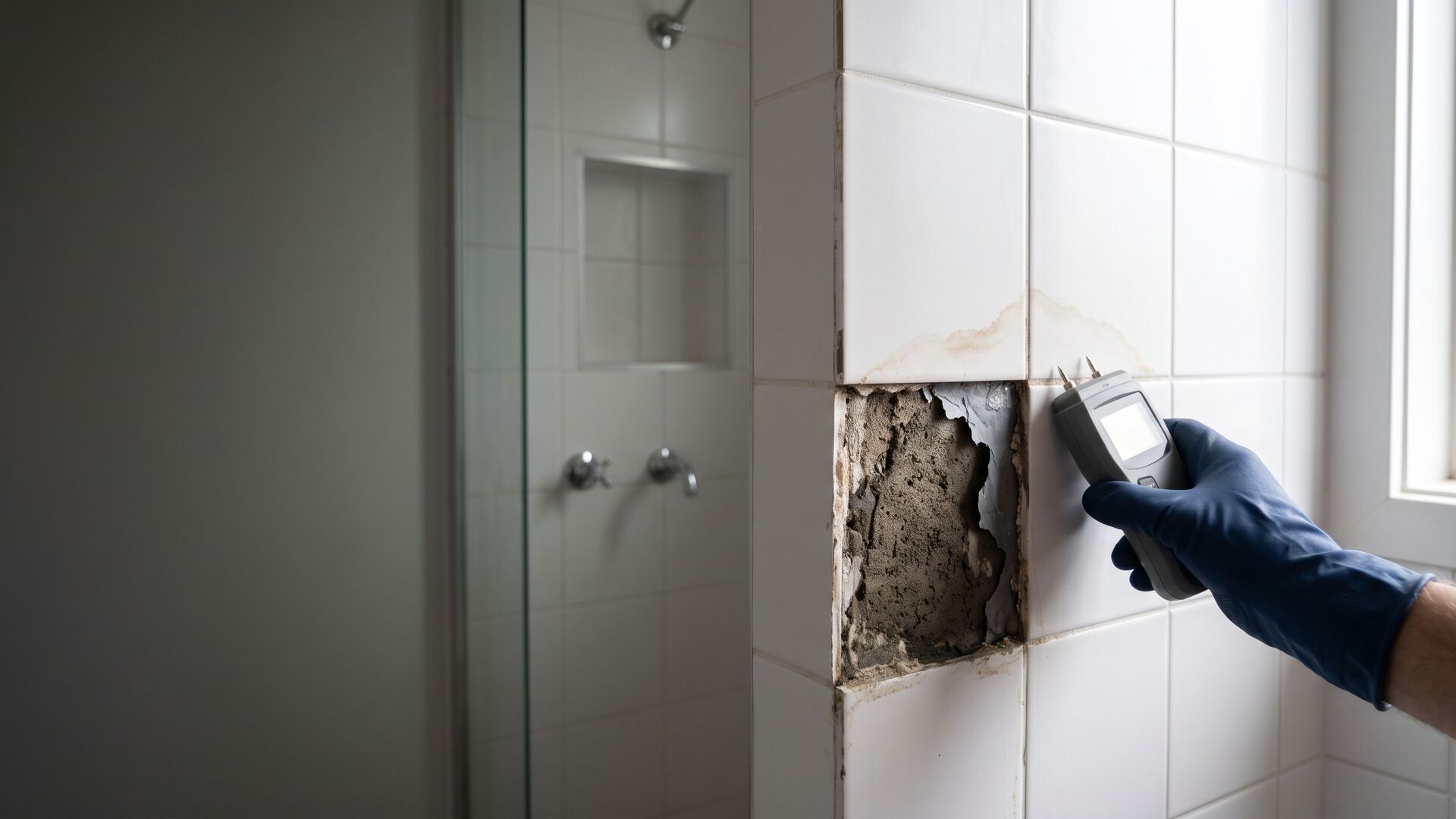
- Waterproofing failures under tiles in wet areas or on balconies, which show up as leaks or damp months later.
- Concealed structural problems, such as inadequate reinforcement or footings that lead to cracking as the building settles.
- Non-compliant materials or fixings behind linings or cladding.
- Services faults hidden in walls or ceilings, such as poorly jointed pipework.
- Roof and façade weatherproofing that only fails in sustained heavy rain.
Latent defects are the expensive ones. By the time they appear, the damage has often spread, finishes have to be removed to reach the fault, and the building may already be occupied.
How the DLP treats each type
During the Defects Liability Period, the contractor must return and fix defects that are notified, whether they are patent ones missed at PC or latent ones that have just appeared. Most contracts make no distinction during the DLP. A defect is a defect.
The difference matters once the DLP ends. The end of the DLP usually ends the contractor's obligation to come back and rectify. It does not normally end their liability for latent defects. The owner may still be able to claim damages for defective work within the limitation period that applies.
Patent defects are treated differently after the DLP. If a defect was obvious and the owner accepted the works without raising it, the owner may find it harder to claim later. That is one reason thorough PC and end-of-DLP inspections matter to both sides.
Time limits
Time limits for defect claims depend on where the project is and what kind of work it is. Broadly:
- Contract claims are generally subject to a six-year limitation period from the breach in most Australian jurisdictions.
- Several states also cap building actions at ten years from completion or the occupation certificate.
- Residential building work carries statutory warranties. In Queensland, for example, the QBCC scheme distinguishes structural defects from non-structural defects, with different time frames for each.
- Contracts can change the position, for example by limiting liability after the DLP. Whether that holds depends on the wording and the law.
These periods are a starting point, not advice. Check the contract and get legal advice for any real claim.
Records that protect both sides
Whether a defect is latent or patent is often argued after the fact. Good records settle the argument:
- Inspection records from PC and the end of the DLP, with photos showing the condition at each point.
- The defects register: every defect raised, when, by whom, who it was assigned to, and how and when it was closed.
- Rectification evidence: before and after photos and sign-off from the principal or their representative.
- Commissioning and test records, which show systems worked when handed over.
- O&M manuals and warranties, which show what was installed and the maintenance it needed. A latent defect claim is weaker if the owner did not follow the maintenance regime.
How Procom helps
Procom's DLP tracking logs every defect with photos, an owner, the responsible trade, a priority and a due date. Reminders chase each item automatically, and every action is time-stamped. When a dispute comes up two years later about what was found and when, the record is already there.
Frequently asked questions
What is a latent defect?
A latent defect is a fault in building work that could not have been found by a reasonable inspection at the time, such as failed waterproofing under tiles or inadequate fixings behind cladding. It usually becomes apparent months or years after completion.
What is a patent defect?
A patent defect is one that is visible or could be discovered by a reasonable inspection, such as damaged paintwork, a misaligned door or a missing fitting. Patent defects are normally picked up at the practical completion inspection or early in the Defects Liability Period.
Is a contractor liable for latent defects after the DLP ends?
Often, yes. The end of the DLP usually ends the contractor's obligation to return and rectify, but it does not normally remove liability for latent defects. The owner may still claim for breach of contract or under statutory warranties within the applicable limitation period, unless the contract validly says otherwise.
How long can you claim for latent defects in Australia?
It depends on the state or territory, the type of building and how the claim is brought. Contract claims are generally subject to a six-year limitation period from the breach, and several states cap building actions at ten years from completion. Residential work also carries statutory warranties with their own periods. Get legal advice for any specific claim.